NUTRITION FOR REAL LIFE
Simple habits. Real food. Better performance and health.
Our nutrition approach isn’t about trends or fads. It’s about how the body actually responds to food over time, everyone is different.
Your body knows what to do with real food.
It recognizes protein, vegetables, fats, and natural carbohydrates immediately.
Highly processed foods take more work to manage and often create energy spikes followed by crashes (think of the crash after eating fast food).
Protein
Isn’t just for muscle, it supports hormones, recovery, immune function, and long-term strength as you age.
Vegetables
are performance food, they help reduce inflammation, improve digestion, and support consistent energy during training weeks—not just workout days.
Healthy fats
support joints, brain function, hormone balance, and sustained energy between meals.
The goal isn’t perfect eating.
It’s eating in a way you can maintain consistently while supporting your health, energy, recovery, and daily life.
When nutrition is simple and repeatable, it becomes something you can carry with you for years—not just in the gym, but in every part of life.
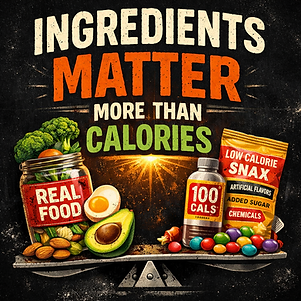
Ingredients matter more than calories
Two foods can have the same calories and completely different effects on recovery, hunger, sleep, and performance.
More labels usually means more processing... If a food needs a paragraph of ingredients, it’s probably not helping your training.
Sugar hides everywhere
Most packaged foods add sugar for shelf life and taste.
Limiting it helps stabilize energy, reduce cravings, and improve recovery. Whole foods make consistency easier
People don’t fail nutrition because they lack discipline. They struggle because processed foods are designed to be overeaten.